


Genetic Divergence and Functional Significance of Bioactive Compounds in Rice and Barley: Implications for Biofortification and Human Health
Essam ElShamey, Jiazhen Yang, Xiaomeng Yang, Md Mahmudul Hasan, Tao Yang, Yawen Zeng
Int J Mol Sci.; 2025 Jul 30; 26(15):7374. doi: 10.3390/ijms26157374.
Abstract
The functional components in cereals (rice and barley), such as gamma-aminobutyric acid (GABA), resistant starch (RS), and alkaloids, play crucial roles in human health, offering benefits such as improved cardiovascular function, enhanced gut microbiota, and potential anticancer properties. Rice (Oryza sativa) and barley (Hordeum vulgare) are key dietary staples with distinct genetic architectures influencing the biosynthesis and accumulation of these bioactive compounds. In this study, we explore the interaction and divergence of gene loci associated with GABA, RS, and alkaloid pathways in rice and barley, leveraging comparative genomics to identify conserved and species-specific regulatory mechanisms. We highlight key quantitative trait loci (QTLs) and candidate genes, such as GAD (glutamate decarboxylase) for GABA synthesis, SSIIa and GBSS for RS formation, and alkaloid biosynthesis genes including CYP80G2. Additionally, we discuss the health implications of these functional components, including their roles in reducing hypertension, managing diabetes, and exhibiting neuroprotective effects. Understanding the genetic differences between rice and barley in accumulating these compounds can guide biofortification strategies to enhance nutritional quality in cereal crops, ultimately benefiting human health and dietary outcomes.
See https://pubmed.ncbi.nlm.nih.gov/40806501/
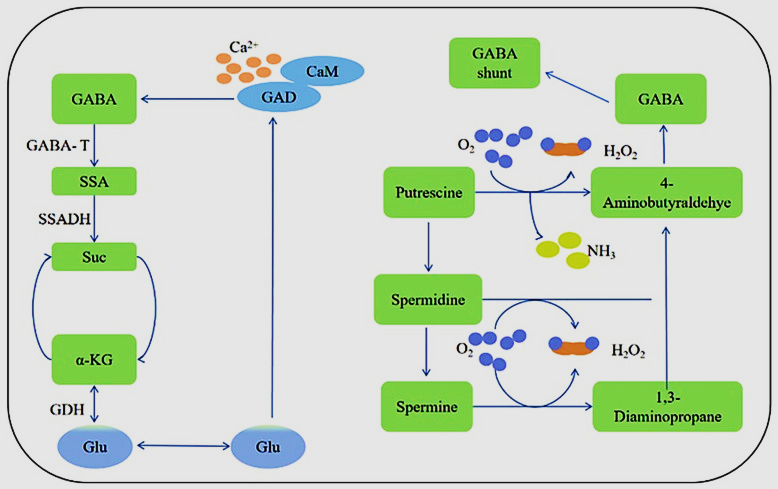
Figure 1: Metabolism process of GABA in plants
Số lần xem: 11
 {mota}
 {mota}
 {mota}
 {mota}
Biochar in the circular bionutrient economy
{mota} {mota}
Progress in Transcriptomics and Metabolomics in Plant Responses to Abiotic Stresses
{mota} {mota}
 {mota}
Fine mapping and prediction of a candidate gene for wrinkled rind in melon (Cucumis melo L.)
{mota}