


Progress in Transcriptomics and Metabolomics in Plant Responses to Abiotic Stresses
Tao Yu, Xuena Ma, Jianguo Zhang, Shiliang Cao, Wenyue Li, Gengbin Yang, Changan He
Curr Issues Mol Biol.; 2025 Jun 5; 47(6):421. doi: 10.3390/cimb47060421.
Abstract
Abiotic stress constrains plant growth and productivity worldwide. To survive adverse environmental conditions, plants deploy sophisticated adaptive strategies involving transcriptional reprogramming and metabolic remodeling. Over the past decade, advancements in high-throughput sequencing and mass spectrometry have propelled transcriptomics and metabolomics as pivotal post-genomic disciplines, offering unprecedented opportunities to dissect molecular mechanisms underlying stress responses. This review synthesizes current progress in applying these omics technologies to investigate plant adaptations to key abiotic stresses (thermal, saline, water deficit/excess, and heavy metal stresses). We systematically evaluate the technical strengths and limitations of transcriptomic and metabolomic platforms, highlight recent breakthroughs in stress-responsive gene identification and metabolic pathway elucidation, and discuss emerging challenges in integrative data analysis. By bridging genotype-phenotype relationships through multi-omics approaches, this study aims to deepen our mechanistic understanding of plant stress resilience and inform the design of stress-resilient crops for sustainable agriculture.
See https://pubmed.ncbi.nlm.nih.gov/40699820/
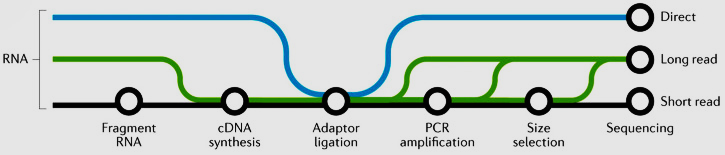
Figure 1: The workflow of RNA sequencing.
Số lần xem: 5
 {mota}
 {mota}
 {mota}
 {mota}
Biochar in the circular bionutrient economy
{mota} {mota}
Progress in Transcriptomics and Metabolomics in Plant Responses to Abiotic Stresses
{mota} {mota}
 {mota}
Fine mapping and prediction of a candidate gene for wrinkled rind in melon (Cucumis melo L.)
{mota}