


Genome-wide identification of the SAM-dependent methyltransferase members and functional analysis of GmSAMMt30 in soybean (Glycine max) under salt-alkali stress
Wenjing Zhang, Jinqi Yu, Zitian He, Jiaxuan Guo, Changchao Huang, Qingqing Xu, Xianya Dong, Ziyi Yang, Beixi Chen, Cheng Quan, Meiqing Li, Qi Zhang & Jidao Du
Theoretical and Applied Genetics; September 4 2025; vol. 138; article 240
Abstract
Saline-alkali soil poses a severe threat to the cultivation and yield of soybean, which is an important oilseed and staple crop. As a key metabolic intermediate, S-adenosyl-l-methionine (SAM) and its associated methyltransferases (SAMMTs) play crucial but poorly understood roles in plant stress responses. This study investigated the expression of SAM-depend methyltransferase (SAMMt) family in soybean. A total of 69 identified GmSAMMt members were divided into 13 subfamilies with similar gene structures by phylogenetic analysis. The GmSAMMt members contained cis-acting elements involved in abiotic stress responses, hormone regulation, and plant growth and development. A tissue-specific expression analysis identified 43 GmSAMMt members with high levels of expression. Haplotype analysis and quantitative real-time PCR (qRT-PCR) screening identified GmSAMMt30 as the most promising candidate gene responsive to saline-alkali stress. In yeast heterologous expression assays, compared to the control strain INVScI(pYES2), GmSAMMt30Hap2 significantly enhanced the growth of recombinant yeast under saline-alkali stress, whereas GmSAMMt30Hap1 exhibited markedly inhibited growth relative to GmSAMMt30Hap2. In transgenic soybean hairy roots, the GmSAMMt30Hap2 genotype showed significantly better phenotypic performance under salt-alkali stress than K599(pSOY1) with lower leaf wilting and content of reactive oxygen species (ROS). In contrast, the GmSAMMt30Hap1 genotype showed increased sensitivity to salt-alkali stress, with more severe leaf wilting and a higher ROS content compared to K599(pSOY1). Therefore, the study lays the foundation for in-depth research on the soybean salt-alkali tolerance traits and its application in molecular marker-assisted breeding for this legume crop.
See https://link.springer.com/article/10.1007/s00122-025-04982-0
Số lần xem: 7
 {mota}
 {mota}
 {mota}
 {mota}
Biochar in the circular bionutrient economy
{mota} {mota}
Progress in Transcriptomics and Metabolomics in Plant Responses to Abiotic Stresses
{mota}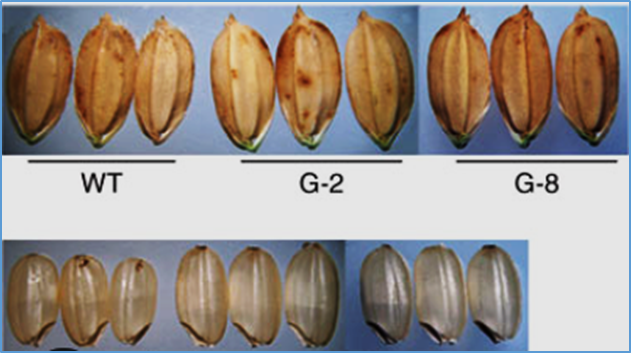 {mota}
 {mota}
Fine mapping and prediction of a candidate gene for wrinkled rind in melon (Cucumis melo L.)
{mota}